Ready to help treat your pet to a healthy life?
Devon Rex: A Cat Breed Guide
By : Kathleen Crampton | Published Dec 17, 2025
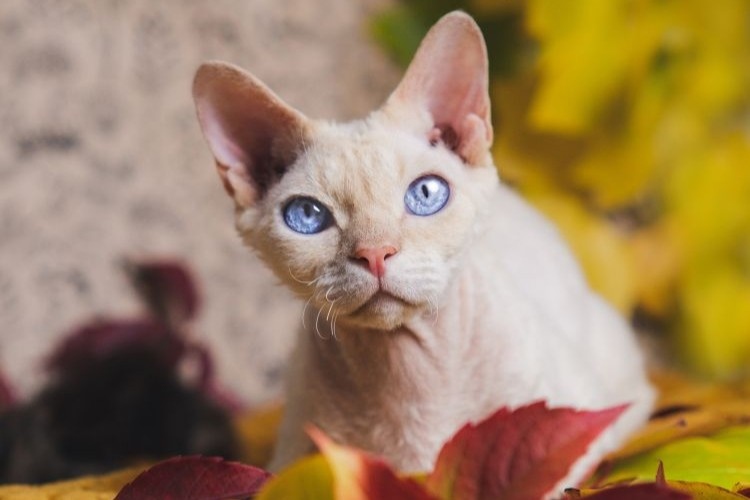
If you've ever seen a curly-coated cat with an elfin-like face, chances are that it was a Devon Rex. The Devon Rex cat breed is one of a kind and a wonderful addition to just about any home. Their thin, curly coat is generally easy to maintain, they're extremely loyal and affectionate, and they're always up for a good time!
For those curious about the breed or even current pet parents of these cute kitties, this Devon Rex breed guide will give you the full picture of what it's like to add one of these cats to your family. Learn about Devon Rex care, temperament, grooming, and more.
Meet the Devon Rex cat
According to The Cat Fanciers' Association, the Devon Rex is one of the most popular shorthair breeds — and for good reason. These sweet companions are playful, affectionate, small in size, and have an adorable pixie look. Here are some interesting tidbits about the Devon Rex:
- Their cousins include the Cornish Rex, the Selkirk Rex, the Sphynx, and a new breed called LaPerm.
- Devon Rexes are not technically hypoallergenic cats, but they are low shedding so may be good pets for allergy-sensitive individuals.
- Devon and Rex, two characters in the 2019 animated remake of Lady and the Tramp, are based on the Devon Rex breed.
- They often cling to or nuzzle up their family members to stay warm. Devon Rex coats don't provide much insulation, so they often need sources of heat to be comfortable.
Devon Rex cat breed facts
Life span | 9 to 20 years |
Size | Small: 5–9 pounds (2.26–4.08 kg) |
Coat type | Curly/wavy, with patches in some areas |
Temperament | Playful, energetic, curious, affectionate |
Ideal household | Suit households with enough attention to give to their Devon Rex; good with children and other pets |
Potential health concerns | Hypertrophic cardiomyopathy, patellar luxation, myopathy, weight issues |
Devon Rex breed history and origin
The Devon Rex dates back only to the 1960s, making it one of the new kitties on the block. The breed's origin story begins with Kirlee, a kitten born to Miss Beryl Cox in Devon, England. This cute little cat had a brown-black coat, but one trait set it apart from other felines that Cox had seen before: Kirlee's coat was curly.
Cox was aware of a group of cat breeders in England that were trying to develop the Cornish Rex, another breed with a curly coat. Cox connected with the breeders, and Kirlee was integrated into the breeding program to help establish the Cornish Rex. However, after testing, the breeders realized that Kirlee's genetic makeup was different from the Cornish Rex. Whereas Cornish Rexes had tight, uniform curls, Kirlee's waves were looser, giving an almost windblown look. With this discovery, instead of continuing Kirlee in the Cornish Rex breeding program, the cat was bred separately to produce its own offspring—and the Devon Rex breed was born.
Europe's Governing Council of the Cat Fancy recognized Devon Rex as a breed in 1967, followed by The Cat Fanciers' Association in 1979.
Devon Rex personality and temperament
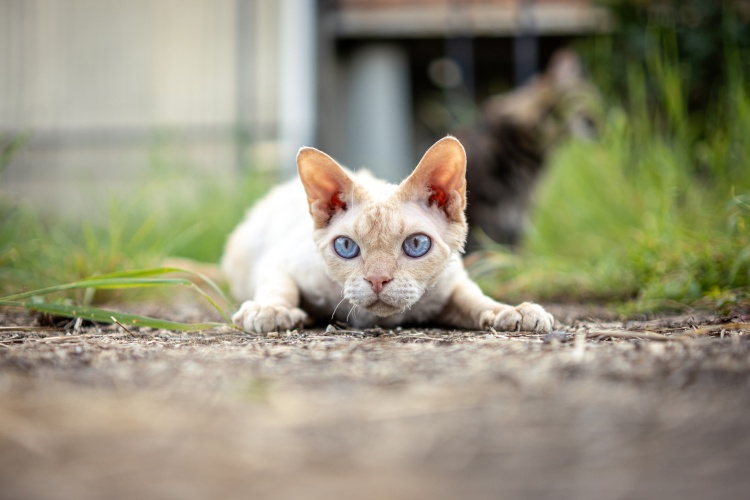
For individuals interested in "dog-like" cats, the Devon Rex is a top choice. Known to be Velcro buddies with their favorite humans, it's safe to say that the Devon Rex is one of the most affectionate cat breeds. Other dog-like qualities include playfulness and even talking to whomever will lend an ear! Many pet parents describe their Devon Rex cats as talkative, making trilling or chirping noises when they want to communicate.
These little felines can also be quite mischievous, as their curiosity often inspires their actions. One person on Reddit describes their Devon Rex as a "mix between monkey, dog, and cat" — a description that many pet parents of these playful pixies can probably relate to. With so much curiosity comes a need for entertainment. If you're not available to pet or cuddle with your Devon, it's helpful to provide them with cat toys, cat towers, a comfy window seat, or even another dog or cat playmate.
Devon Rexes are also highly trainable, often able to respond to their name being called and learn new tricks.
Devon Rex appearance and coat characteristics
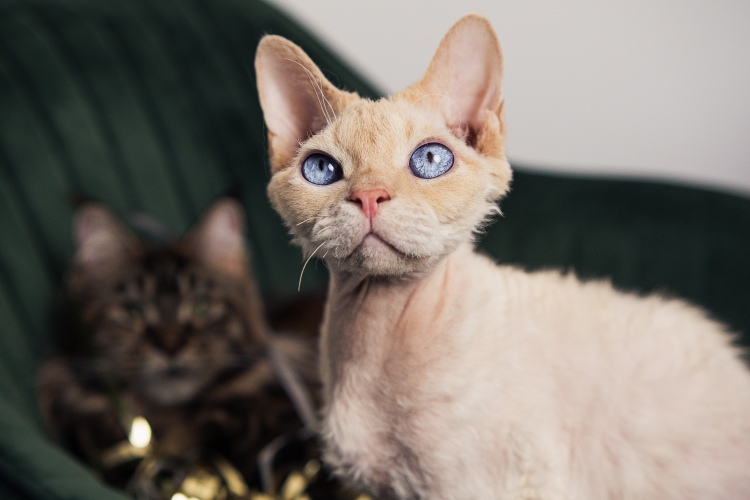
The Devon Rex's pixie-like appearance is its most significant and endearing physical quality. Its small build and thin body makes the Devon Rex's broad head and large, low-set ears even more pronounced. Those big ears and huge eyes are described by The Cat Fanciers' Association as giving the Devon Rex an "elfin expression."
Devon Rex's body type:
- Height: 10–12 inches (25.4–30.48 cm)
- Weight: 5–9 pounds (2.26–4.08 kg)
- Build: Small size with a surprisingly muscular build, as well as a broad chest and long, thin legs
The breed's unique coat, however, is what really sets it apart from other furry felines. Devon Rex cats have curly, wavy coats, with soft, short fur. A gene mutation causes not only curliness but also thinness. Anyone who has pet a Devon Rex knows that their coat is quite minimal! That's because of a genomic sequence called KRT71, which is present in Rex breeds. This gene mutation causes little to no guard hairs (a cat's coarse outer layer); a unique, textured coat; a rippling effect across the fur; and even a lack of full coat development across its body. Some pet parents may think this is cause for concern, but it's normal for Devon Rex cats' necks and bellies to have bare patches.
Devons come in lots of colors, including single colors, tabby patterns, two-color combinations, and even complex shadings.
Devon Rex grooming needs and skin care
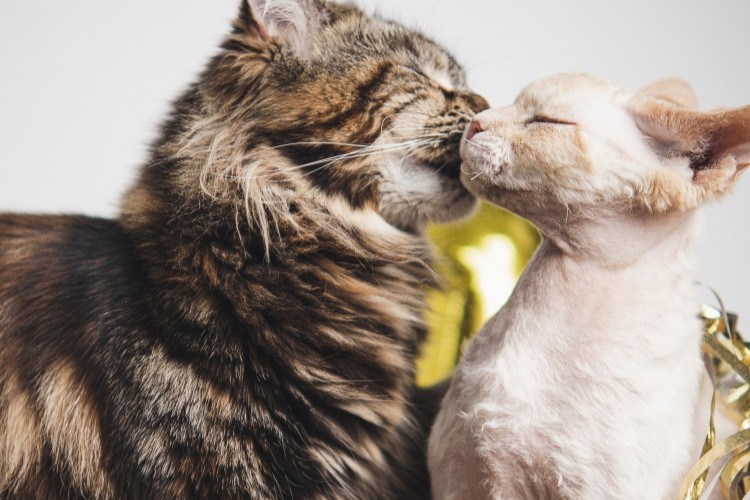
Devon Rex grooming needs are minimal to moderate. Learn how to care for your Devon Rex with these tips:
- Brushing: Their short coats don't require as much brushing as longhaired cat breeds, and the texture and small amount of fur typically means that their coats aren't as prone to matting. Aim to brush their coat with a soft-bristled brush no more than once a week. With this breed, it's important to not overbrush, as doing so can damage their coat and skin.
- Bathing: Devon Rexes require the occasional bath to reduce excess oils that might irritate their skin. Be sure to use a cat shampoo and talk with your vet about the right bathing frequency.
- Ear care: The Devon Rex's large ears tend to accumulate earwax, oils, and dirt, so cleaning them routinely with a vet-approved wipe is key to preventing infections.
- Skin care: Because this breed has fine, thin hair and perhaps some patchy areas that show more skin, they shouldn't spend much time in the sun. Pet parents should perform routine checks of their skin, looking for any signs of irritation, dry patches, or redness.
- Nails: All cats need nail trimming every few weeks to avoid them getting snagged on furniture. Here's our nail-trimming guide for cats.
- Oral care: Brushing their cat's teeth is likely a pet parent's least favorite grooming task, but good oral care is crucial for preventing dental issues down the road. Brushing daily with a cat-specific toothbrush is ideal but at least three times per week should suffice.
Common health issues in Devon Rex cats
There aren't too many Devon Rex health problems to be aware of, as this breed is generally healthy. However, the following are some potential issues that some Devon Rexes have been known to inherit or develop:
- Patellar luxation: This breed is susceptible to patellar luxation, which involves the kneecap moving out of place. Asymptomatic cats and cats with grade 1 luxations may not require treatment. For other affected felines, treatment may range from rest and anti-inflammatory medicine in mild cases to surgery in severe cases.
- Myopathy: Sometimes called "Devon Rex myopathy," hereditary myopathy is a form of muscular dystrophy or congenital myasthenic syndrome and occurs when there's a communication problem between nerves and muscles. This typically isn't a fatal disease, but affected cats will likely experience muscle fatigue and weakness throughout their life. DNA tests can be done on Devon Rexes to see if they are carriers of the gene mutation.
- Weight issues: Devon Rexes typically have large appetites and fast metabolisms, but overeating could result in some kitties gaining too much weight. To help your cat stay at a healthy weight, feed them protein-rich food and talk with your vet about how and when to feed your Devon Rex.
Remember that not all Devon Rex cats will inherit or develop these conditions, as every cat is unique. Two of the keys to your furry feline's health is taking them for routine vet checkups and wellness exams and getting kitten insurance to get ahead of any hereditary conditions that may develop.
Is a Devon Rex right for you?
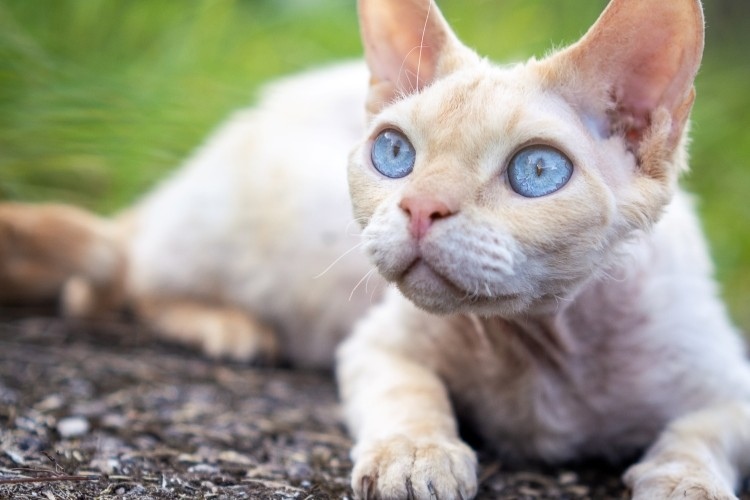
If you're keen on having a constant sidekick and are able to provide your pet with lots of attention, a Devon Rex will fit right into your home. Bonus points if there's another cat or feline-friendly dog in the house to play with your Devon Rex.
This cat breed is amiable, affectionate, intelligent, and curious and doesn't require as much grooming as, say, other longhaired breeds. That said, Devon Rexes are quite vocal, can get into mischief if not entertained, and might not do well for long periods on their own — but their adorable looks and loving personalities make up for any potential drawbacks.
Pet insurance for Devon Rex cats
When you're ready to bring a Devon Rex home, don't forget to cross "get a pet insurance policy" off your to-do list. Cat insurance is one of the best ways to help your furry friend stay by your side for as long as possible. A policy can help pay for treatments for covered hereditary and chronic conditions, as well as any accidents that your little mischief-maker may have.
FAQs about Devon Rex cats
Learn more about this cute cat breed.
Are Devon Rex cats hypoallergenic?
Technically, there are no fully hypoallergenic cats because the allergens they produce may be present in their saliva and sweat—not just in their fur. That said, Devon Rex cats are considered one of the best cats for allergies because they have minimal shedding and their hair naturally absorbs Fel d 1, one of the top allergy-instigating proteins.
What health problems do Devon Rex cats have?
Not all Devon Rex cats have health problems. However, there are some issues and medical conditions that this breed is predisposed to, such as patellar luxation, myopathy, and weight issues.
Do Devon Rex cats shed?
Yes, Devon Rex cats shed but less so than other long-haired cats. These curly-coated cats have few guard hairs, so they shed minimally.
Are Devon Rex cats friendly with kids or dogs?
Yes, Devon Rex cats are friendly with kids and dogs, especially those that are part of their household. The Devon Rex cat breed is typically very welcoming of new visitors.
What’s the life span of a Devon Rex?
The life span of a Devon Rex may be anywhere from 9 to 20 years.
Pet Parenting is the official dog and cat blog of Trupanion, a leader in the world of pet insurance. Here you’ll find useful dog and cat care tips, important veterinary insights, and an abundance of pet lifestyle topics. All of our articles are written by real humans with a love for pets, not AI. However, please note that the views expressed here are those of the individual authors and do not necessarily reflect those of Trupanion. Articles are reviewed by veterinarians for accuracy, but they are not a substitute for professional diagnosis and treatment. Always consult with your own pet’s veterinarian for advice.